
Research & Publications | IEEE Papers by Mahmudur Rahman
IEEE-Published Researcher

Research & Publications — IEEE Papers in Cybersecurity, Medical AI & IoT

Academic research spanning malware detection, medical image classification, smart IoT systems, and facial recognition — published at peer-reviewed IEEE international conferences.

A rare distinction that very few WordPress developers and SEO specialists can claim: published research in machine learning and cybersecurity at internationally recognised IEEE conferences. This academic foundation directly informs the security-first, data-driven approach applied to every client project.

Research Overview

Academic Research Spanning Cybersecurity, Medical AI & Intelligent Systems

Research is the academic foundation underlying every professional recommendation and business solution I deliver. Published IEEE research in machine learning, cybersecurity, IoT, and medical AI provides a rigorous, evidence-based perspective that is rare in the freelance web development space.

With papers presented at international IEEE conferences across India and Bangladesh, each study has undergone rigorous peer review — validating the methodologies, results, and academic contribution to the field.

This research background directly informs a security-first approach to WordPress development, data-driven SEO strategy, and cybersecurity consulting — applying academic rigour to practical business outcomes.

🛡️ Cybersecurity & Malware Detection 👁️ Medical Image Classification 🚗 IoT & Smart Systems 🧠 Machine Learning & Deep Learning 👤 Facial Recognition
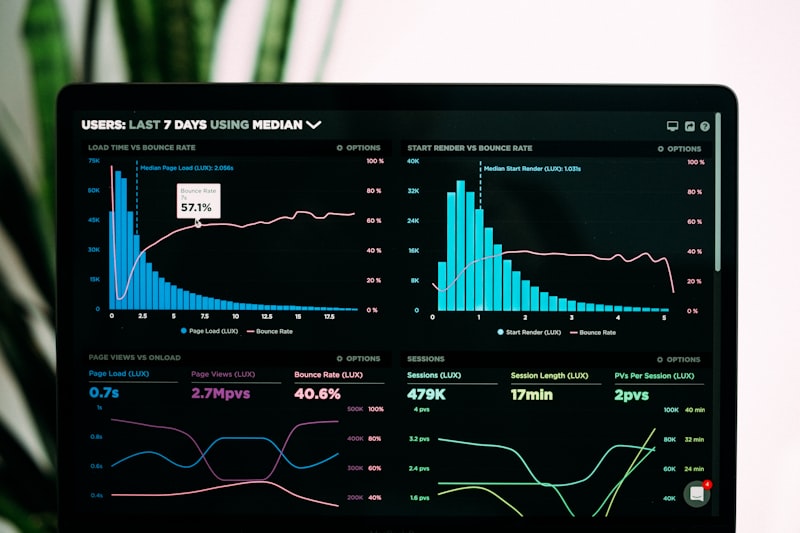
Data analytics and research visualisation on computer screens — representing academic research methodology in machine learning and cybersecurity
Peer-Reviewed Publications

Published IEEE Research Papers

Each paper has been presented at international IEEE conferences and undergone rigorous peer review, contributing new knowledge to its respective field.

Cybersecurity digital network visualisation — malware classification research using deep neural networks for threat detection
IEEE 2025
Research Paper 01

Malware Classification Using a Hybrid Deep Neural Network Approach

🏛️ IEEE IATMSI 2025  ·  Gwalior, India

This paper presents a hybrid approach combining Deep Neural Networks (DNN), Recurrent Neural Networks (RNN), and Convolutional Neural Networks (CNN) for accurate malware classification. The ensemble model achieves superior classification performance compared to individual model approaches, demonstrating that hybrid architectures significantly improve detection capabilities in cybersecurity applications. Results demonstrate the potential for real-world deployment in automated threat detection systems.

96.76%
Classification Accuracy
97%
Recall Score
97%
Precision Score
Malware Detection Deep Neural Network RNN CNN Cybersecurity Classification
View on Google Scholar
Medical imaging and ophthalmology equipment — representing CNN-based eye cataract disease classification research using deep learning
IEEE 2024
Research Paper 02

Eye Cataract Disease Classification Using Pre-Trained CNN Ensemble Model

🏛️ IEEE ICCIT 2024  ·  Cox's Bazar, Bangladesh

This research proposes a pre-trained Convolutional Neural Network (CNN) ensemble approach for early and accurate classification of eye cataract disease from retinal images. Using transfer learning with multiple pre-trained architectures combined in an ensemble, the model achieves exceptional accuracy in distinguishing healthy eyes from cataract-affected ones. The approach shows promise for supporting early diagnosis in resource-limited medical environments where specialist access may be restricted.

98.62%
Classification Accuracy
99%
Recall Score
99%
F1 Score
Medical AI CNN Ensemble Cataract Detection Transfer Learning Deep Learning Healthcare
View on Google Scholar
Electronic circuit board and IoT components — representing Arduino-based smart car parking system research using IoT sensors
IEEE 2023
Research Paper 03

Arduino Uno-Based Smart Car Parking System

🏛️ IEEE ICCCNT 2023  ·  Delhi, India

This paper presents an IoT-based automated smart car parking infrastructure designed using Arduino Uno microcontrollers and ultrasonic sensors. The system addresses urban parking congestion and security challenges in high-density environments by providing real-time parking availability detection, automated barrier control, and remote monitoring capabilities. The solution offers a cost-effective and scalable approach to modern urban parking management that can be deployed with minimal infrastructure changes.

IoT
Core Technology
Real-Time
Monitoring
Arduino
Platform
IoT Arduino Uno Smart Parking Embedded Systems Urban Technology Ultrasonic Sensing
View on Google Scholar
Face recognition and biometric technology concept — representing smart attendance system research using CNN and Haar Cascade machine learning
IEEE 2022
Research Paper 04

Smart Presence System Using Machine Learning

🏛️ IEEE CCET 2022  ·  Bhopal, India

This paper proposes a real-time automated attendance system using facial recognition powered by Convolutional Neural Networks (CNN) and the Haar Cascade Classifier. The system eliminates manual attendance tracking in educational and corporate environments by automatically recognising registered faces from live camera feeds. High accuracy and rapid processing make it viable for real-world deployment in lecture halls, offices, and access control systems where reliable identification is critical.

99%
System Accuracy
CNN
Core Model
Real-Time
Processing
Facial Recognition Machine Learning CNN Haar Cascade Attendance System Computer Vision
View on Google Scholar

+1 Additional IEEE Paper is published on the Google Scholar profile. Visit the profile page to view the complete list of all 5 peer-reviewed IEEE publications.

View All 5 Papers on Google Scholar
Why It Matters

Research Impact & Academic Contributions

Published research in machine learning and cybersecurity contributes to the broader scientific community while directly shaping the practical approach applied to every client project.

Advancing Cybersecurity

The hybrid malware classification research contributes practical improvements to automated threat detection — supporting more effective defences against evolving cyber attacks.

Supporting Healthcare Technology

The cataract detection model has potential to support early diagnosis in resource-limited settings — demonstrating how AI can improve healthcare access and patient outcomes.

Smart Urban Solutions

The IoT parking research addresses real urban challenges — demonstrating how embedded systems can solve day-to-day problems in smart city infrastructure at scale.

Improving Institutional Efficiency

The facial recognition attendance system reduces administrative overhead in educational institutions and workplaces — demonstrating practical ML deployment at low cost.

Bridging Theory and Practice

Academic publication experience means every client recommendation is grounded in evidence-based methodology and rigorous testing standards applied from research.

Data-Driven Business Decisions

The same analytical rigour and data-driven thinking applied in academic research is used to guide business strategy, SEO decisions, and cybersecurity assessments.

How Research Is Conducted

Research Methodology & Approach

Each published paper follows rigorous academic standards — from data collection and model design through to validation and peer review at an IEEE conference.

Problem Identification

Identifying a real-world challenge where machine learning or IoT can provide measurable improvement — grounded in existing literature and practical observation.

Dataset Preparation

Collecting, cleaning, and preparing quality datasets — ensuring reliable, unbiased training and evaluation data for machine learning models.

Model Design & Training

Selecting, designing, and training architectures — including CNNs, RNNs, DNNs, and ensemble approaches — with systematic hyperparameter tuning.

Evaluation & Validation

Rigorous testing using accuracy, precision, recall, and F1 Score metrics against unseen validation and test datasets to confirm generalisation.

Peer Review & Publication

Submitting to and presenting at international IEEE conferences — passing expert peer review to validate the methodology and contribution.

Machine learning model training and data science workflow on a laptop — representing the research methodology used in IEEE published papers
At a Glance

Research by the Numbers

5

IEEE-Published Papers

4

International IEEE Conferences

4

Distinct Research Domains

98.62%

Peak Classification Accuracy

Technical Stack

Technologies Used in Research

Machine learning frameworks, data science tools, and hardware platforms used across all published IEEE research papers.

Python & Libraries

  • TensorFlow & Keras
  • Scikit-learn
  • NumPy & Pandas
  • Matplotlib & Seaborn

Deep Learning Models

  • Convolutional Neural Network (CNN)
  • Deep Neural Network (DNN)
  • Recurrent Neural Network (RNN)
  • Pre-trained Transfer Models

Computer Vision

  • OpenCV
  • Haar Cascade Classifier
  • Image Preprocessing
  • Feature Extraction

IoT & Embedded

  • Arduino Uno
  • Ultrasonic Sensors
  • Servo Motors
  • LCD Display & LEDs
Academic Foundation

Academic Background

The educational foundation that supports both the research publications and the applied professional practice.

Master in Information Technology (MIT)

Jahangirnagar University (JU) · 2023–2024

Postgraduate study in information technology covering advanced topics in computer science, machine learning, and cybersecurity — providing the academic foundation for IEEE research publication in emerging technology fields.

Bachelor of Science in Computer Science & Engineering (CSE)

Daffodil International University (DIU) · 2018–2022

Undergraduate degree covering computer science fundamentals, software engineering, machine learning, and programming — forming the technical basis for all subsequent research, development, and cybersecurity work.

Interested in Research Collaboration or Academic Consultation?

Whether you want to discuss research methodologies, explore collaboration opportunities, or simply learn more about the published work — feel free to reach out directly.